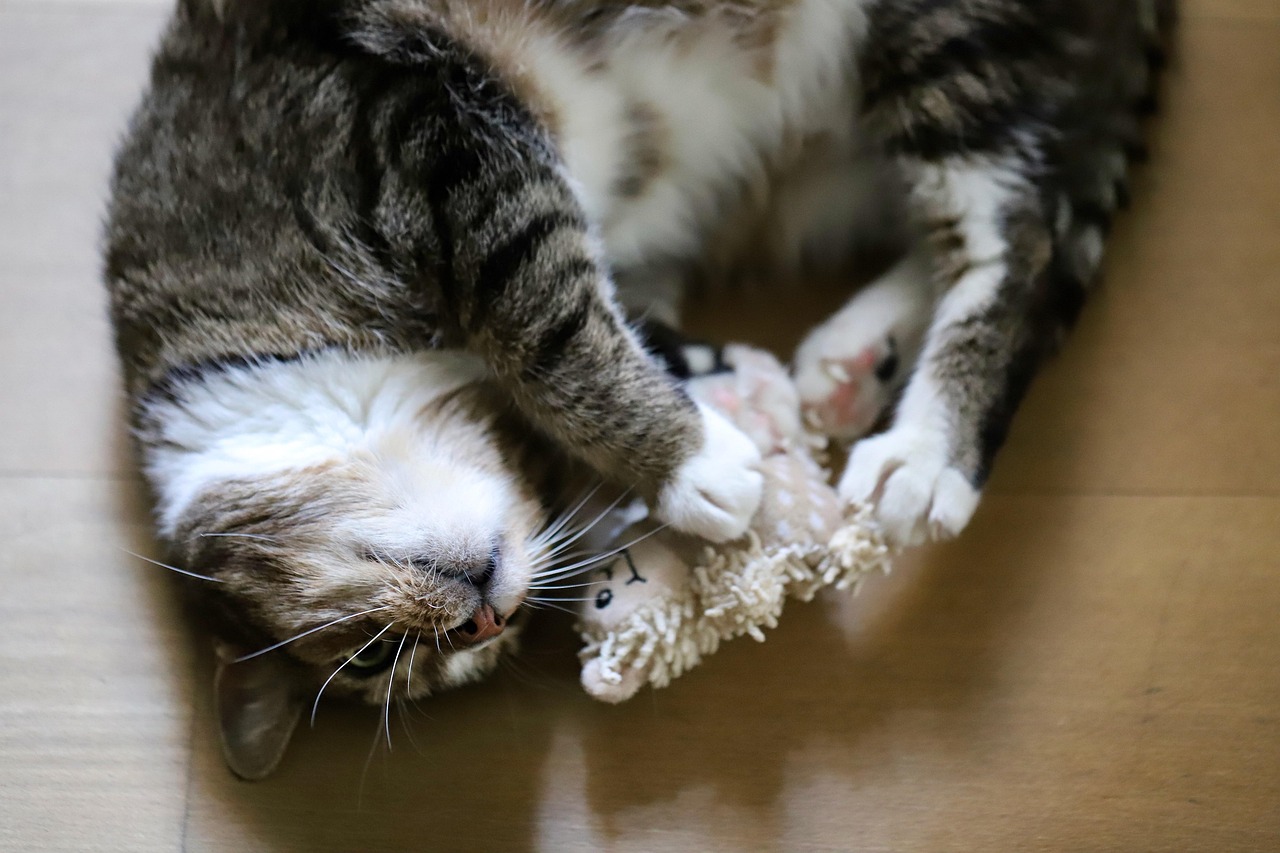

Play Behavior as a Sign of Cat Intelligence and Learning
Play behavior in cats is a fascinating aspect that showcases their intelligence and learning abilities. Unlike humans, cats express their cognitive abilities through play. This behavior allows them to develop essential skills while having fun. Through various forms of play, such as stalking, pouncing, and chasing, cats not only enjoy themselves but also hone their reflexes and agility. For instance, when a kitten chases a ball, it is practicing coordination and sharpened senses. Additionally, play mimics hunting behaviors, which are essential for survival in the wild. Implementing toys like feathers or balls can stimulate their instincts. This helps them learn how to stalk and capture prey. Surprisingly, when engaging in play, cats can also learn social skills. During interaction, they get to know their environment, people, and other animals. Play helps reduce stress and anxiety, contributing to their emotional well-being. Each play session fosters a stronger bond between cats and their owners, reinforcing loyalty and affection. Thus, observing a cat’s play behavior can give us insight into their minds, demonstrating intelligence that goes beyond simple instinct.
The Importance of Play in Cat Development
Understanding the importance of play in cat development is crucial for any pet owner. Play acts as a learning tool, assisting in the development of fine motor skills and intelligence. Kittens, when allowed to engage in play, learn about their physical limits and enhance their ability to interact socially. This learning is paramount, as it shapes their behavior into adulthood. Play encourages exploration and provides a safe avenue for cats to discover their surroundings. Owners should consider providing a variety of toys to keep intrigue alive during playtime. Toys made from different materials stimulate various senses, enriching their experience. Moreover, interactive play with owners fosters a sense of security and builds trust. This interaction significantly enhances their problem-solving skills. Puzzles and treat-dispensing toys can also engage a cat’s intellect while providing entertainment. As they navigate challenges, cats learn to strategize and adapt, improving their cognitive abilities. It is thus vital for owners to prioritize playtime in their schedules. This keeps their cats mentally stimulated, ultimately enhancing their overall quality of life and emotional health.
Cats often exhibit unique play behaviors that can be interpreted as signs of intelligence. Play is not just a simple pastime; it serves profound purposes in their lives. For instance, young cats learn to assess their surroundings, approach challenges, and respond to stimulating situations. They actively engage their minds while playing, making decisions and solving problems. Such behaviors often transform mundane objects into captivating toys. When cats paw at a string or bat around a crumpled ball, they show creativity influenced by their instincts. Owners might notice variations in play styles; some cats prefer solitary play, while others thrive on social interactions. This ability to adapt to personal preferences illustrates their learning capacity. Moreover, play behavior promotes physical health, enabling cats to maintain a healthy weight and muscle tone. A cat that engages in regular, varied play reduces the likelihood of obesity, heart disease, and other health issues. Therefore, providing an environment rich with engaging toys can significantly contribute to a cat’s mental and physical development. By recognizing and fostering these behaviors, owners can support their beloved companions’ growth and happiness.
The impact of socialization on play behavior in cats is another critical consideration. Cats learn social cues from interacting with their peers and owners. When engaging in play, they often mirror behaviors seen in their environment. For instance, a kitten observing its mother can imitate her actions during playtime. These early experiences shape their interpersonal skills, affecting how they relate with other pets and humans throughout their lives. Moreover, introducing new animals into a household can alter play dynamics. It often presents a unique challenge as cats learn to navigate relationships. Through play, they can establish boundaries and roles in their social structure. Recognizing when to be assertive or submissive hinges on these playful encounters. Older cats may adjust their play style, revealing aspects of intelligence through adaptation. Providing multiple playmates can foster cooperative play, enhancing emotional resilience and adaptability in younger cats. Play also teaches important lessons about respect and boundaries, which are vital for harmonious living within multi-pet households. Consequently, promoting positive play experiences fosters strong character development and social skills in cats.
Interactive Play and Mental Stimulation
Interactive play is essential for stimulating a cat’s mental faculties. Such engagements provide an opportunity for physical exercise and cognitive challenges. Additionally, incorporating interactive elements into play can create a richer experience for cats. For instance, using laser pointers or feather wands allows immediate feedback and encourages them to channel their hunting instincts. This engagement not only entertains but also promotes healthy behaviors. Such activities stimulate their brains and help maintain their overall mental health. Owners should set aside dedicated time for this engagement, fostering a deeper bond through shared activities. Studies show that cats who participate in interactive play exhibit elevated happiness levels and reduced stress. Moreover, engaging a cat in different types of play can prevent boredom, which often leads to undesirable behaviors. Puzzles and treat-dispensing toys are fantastic options as they challenge a cat’s problem-solving skills. Such toys promote engagement while encouraging them to think critically. Cats thrive on mental stimulation, and integrating varied play styles is essential for fulfilling their natural curiosity. Understanding these play behaviors helps owners provide more enriching environments conducive to their feline companions’ well-being.
Play behavior also serves as a crucial indicator of a cat’s emotional well-being. A healthy cat will typically display high levels of playfulness. However, any sudden changes in play behavior can signal underlying issues, such as stress or illness. Cats are creatures of habit; thus, noticing a decline in their playful attitude alerts owners to potential health concerns. They may become disinterested in toys or shy away from interaction altogether, highlighting that something is amiss. Monitoring these subtleties becomes essential for early detection of health complications. Stressors in their environment, such as loud noises or changes within the household, can significantly impact their playfulness. Addressing these stressors helps restore emotional balance. Providing safe spaces for retreat during stressful times can encourage cats to rejuvenate. Moreover, recently adopted cats may exhibit varied play behaviors as they adjust to new surroundings. Creating a predictable routine and offering consistent playtime can ease their transition. Overall, playfulness can be viewed as a barometer of a cat’s emotional state, revealing how they cope with their surroundings, indicating their comfort and contentment.
In conclusion, understanding play behavior is vital in evaluating feline intelligence and learning. Cats use play as a means to hone their physical abilities and develop essential social skills. Observing a cat’s unique play style provides insight into their personality and intellect. Engaging in play is not just a necessity; it’s a form of self-expression that contributes significantly to their well-being. Regular interaction through play enriches their lives, ensuring they remain mentally and physically active. It is crucial for owners to recognize the importance of various playstyles and their impact on their cats’ health. Simple actions, such as introducing new toys or engaging in interactive play, can foster positive growth and development. Being attentive to changes in play behavior can help owners understand their feline companions better, allowing them to respond effectively to their needs. By promoting a playful environment, pet owners contribute to their cats’ happiness. Ultimately, play behaviors serve as a valuable tool in deciphering the complexities of feline mental processes. Encouraging play leads to enriched lives, better health, and lasting bonds between cats and their caregivers.
The Final Thoughts on Cat Play
In essence, examining play behavior is essential for comprehending a cat’s intelligence and learning capacities. Owners are encouraged to embrace play as a fundamental aspect of a cat’s life. A thriving social and emotional life revolves around interactions stemming from playful activities. Recognizing and valuing the role of play fosters a better understanding of feline psychology. By understanding these behaviors, owners can create enriching environments that cater to their cat’s needs, thereby enhancing their quality of life. Providing opportunities for interactive play will keep cats agile and continuously learning, increasing their overall well-being. Crafting various avenues for exploration promotes curiosity and a zest for life, highlighting the importance of continuous engagement. As each cat is unique, tailoring activities according to individual preferences supports mental stimulation and emotional fulfillment. This ongoing commitment to understanding their play habits can lead to a more profound bond with their feline companions. Appreciating the intricacies of cat behavior remains key to realizing their full potential. Ultimately, fostering a rich play environment reshapes the lives of cats and significantly uplifts the human-feline relationship.