
How Cats Use Their Whiskers to Communicate
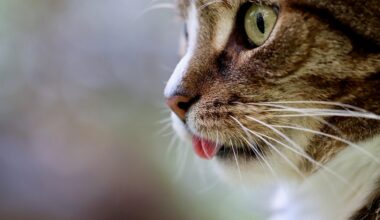
Whiskers, scientifically known as vibrissae, are more than just ornamental features on a cat’s face. Whiskers are highly sensitive tactile hairs that help cats navigate their environment and communicate their feelings. These specialized hairs can detect subtle changes in air currents and nearby objects, which is critical for judging distances and spatial awareness. Socialization for cats is deeply intertwined with body language, and whiskers play a vital role in this interaction. When a cat is relaxed and comfortable, its whiskers tend to be in a neutral forward position. Conversely, if a cat feels threatened or fearful, its whiskers will retract towards its face, indicating anxiety or aggression. Understanding these whisker movements can provide insights into a cat’s mood and intentions. Additionally, whiskers are also essential when it comes to hunting or exploring tight spaces, as they can signal when the cat encounters a barrier. Owners should observe their cat’s body language, especially whisker positioning, to better understand their pet’s emotional state and responses to various situations. Such awareness can strengthen the bond between cats and their human companions.
Observing a cat in play, you may notice its whiskers twitching and extending. This behavior indicates excitement and curiosity, often seen in young or playful cats. Whisker twitches paired with wide eyes and an erect tail can signify heightened alertness. When a cat is stalking or hunting, its whiskers may be angled forward, helping it gauge how close it is to its prey. A cat’s whiskers are approximately as wide as its body, thus acting as a measuring tool. This is particularly useful for navigating through narrow spaces safely. Furthermore, cats use their whiskers to help build an understanding of their environment. In unfamiliar settings, they may extend their whiskers forward, absorbing tactile information with each movement. This tactile feedback contributes to their awareness and assists them in making safe navigational choices. Social creatures by nature, cats also use their whiskers to communicate with fellow felines during social encounters. If their whiskers appear relaxed and in natural placement, this usually denotes a peaceful disposition. Conversely, whiskers that are fluffed and bristled signal territorial behavior or a defensive posture when interacting with other cats.
To effectively socialize a cat, understanding its non-verbal communication through whiskers and body language is crucial. When approaching or petting a cat, take the whisker positions into consideration to avoid alarming the animal. Understanding signaling from whiskers can indicate when a cat requires personal space. For instance, if a cat flattens its ears and draws its whiskers back, this means it needs to retreat, as it feels threatened. Additionally, if a cat approaches you with forward-facing whiskers, it often indicates curiosity or affection, inviting interaction. The current social context is important, as environmental factors also affect how a cat uses its whiskers. If a cat is in a safe setting with familiar scents, its whiskers tend to be in a relaxed position. Yet when faced with an unfamiliar environment, these hairs will be more assertively forward. Socialization and anxiety play critical roles in the development of a cat’s whisker communication. Thus, possible pet owners or caregivers should acknowledge context before engaging, which will lead to better interactions and relationships, promoting a mutual sense of trust between cat and human.
The Importance of Whiskers in Communication
Being aware of how a cat uses its whiskers for communication can enhance interaction and help build a trusting relationship. Cat owners are encouraged to observe and respond to whisker signals, as they reveal a lot about a cat’s comfort and mood. For instance, when meeting new people, a cat may cautiously extend its whiskers forward while backing up its body language with relaxed posture. This reflects curiosity without aggression. On the other side, a cat trapped in a corner with its whiskers pulled back is a sign of distress and should be approached with caution. Utilizing whiskers to gauge how to invite interaction will help alleviate anxiety in social situations. Encouraging cats to feel brave and secure while maintaining calm body language is essential. If whiskers are consistently retracted or whiskers appear bristled, backing off is the best approach. Experts recommend creating a balanced environment with appropriate spaces for anxious cats to explore; taller cat trees can allow them to assess their surroundings from safety, thus helping build confidence.
Socialization should start early to enhance the comfort level of cats around humans. Kittens learn to communicate through social play with their siblings. During play, they are frequently exposed to various forms of body language, including the movements of whiskers. This early exposure helps them learn appropriate interactions, how to express themselves, and how to read others’ emotions. Socialization becomes increasingly crucial for adult cats that may have missed these formative interactions. They rely on their whiskers even more to assess human interactions as they explore their new surroundings or meet new people. However, it’s essential to approach adult cats gradually and read their whisker cues. By observing these cues, you not only help an adult cat feel more secure in their new home but also encourage them to use body language confidently to express emotions. Successful socialization can dramatically improve a cat’s quality of life. Owners should use positive reinforcement techniques, such as praising or offering treats, to help adult cats feel more comfortable and open to social opportunities.
Whisker Fatigue and Its Effects
A lesser-known yet important aspect of a cat’s whisker usage is “whisker fatigue,” which can hinder a cat’s ability to communicate effectively. Whisker fatigue occurs when a cat’s sensory whiskers are overstimulated, often from prolonged contact with dishes or objects. Cats rely on their whiskers for feeding, emotional expression, and navigating. When you notice them appearing distressed or avoiding food altogether, consider that their whiskers may be experiencing fatigue. A signal of whisker fatigue is if a cat begins to eat but frequently paws at their dish or acts uninterested. To alleviate this issue, transition to wider, shallow dishes that allow food access without whisker contact. Consider experimenting with various dish types to find an optimal choice that doesn’t stress the whiskers. Recognizing and preventing whisker fatigue can help improve a cat’s interaction with their food, reducing stress during meal times. This, in turn, can lead to a happier and healthier cat who feels confident showing trust and comfort during feeding times. Prioritizing whisker well-being ultimately fosters a greater bond with your feline friend.
Whiskers not only serve critical functions for navigation and communication but also enhance a cat’s emotional intelligence and behavioral interaction. Owners often overlook the significance of whisker position in understanding their pet’s mood. This lack of acknowledgment can lead to misinterpretations of a cat’s behavior. Positive reinforcement encourages self-expression in a comfortable way, alleviating stress associated with social interactions. It’s essential that cat owners pay close attention to the way whiskers move and the signals they send. Incorporating the understanding of whisker behavior into pet care enhances both the owner’s and the cat’s life experience. Educating others about the importance of whiskers extends from the family to friends, thus creating a more empathetic community surrounding pet care. Observing how cats react to stimuli is crucial in guiding their interactions in social situations. A healthy awareness of whisker communication fosters compassionate and responsible pet ownership. Socialization, coupled with unique whisker behavior, ultimately contributes to building long-lasting relationships. The journey of fostering a strong bond with cats is rich and fulfilling, greatly amplified by understanding their unique modes of communication.
Whiskers are often underestimated, yet they are remarkable tools that enable cats to express themselves. Understanding how to interpret such movements can transform the way we interact with our feline friends. As we observe their body language closely, particularly their whisker positions, we learn to engage with empathy and precision. In conclusion, the role of whiskers in communication emphasizes their importance in cat socialization and emotional expression, shaping the overall well-being of our lovely companions.